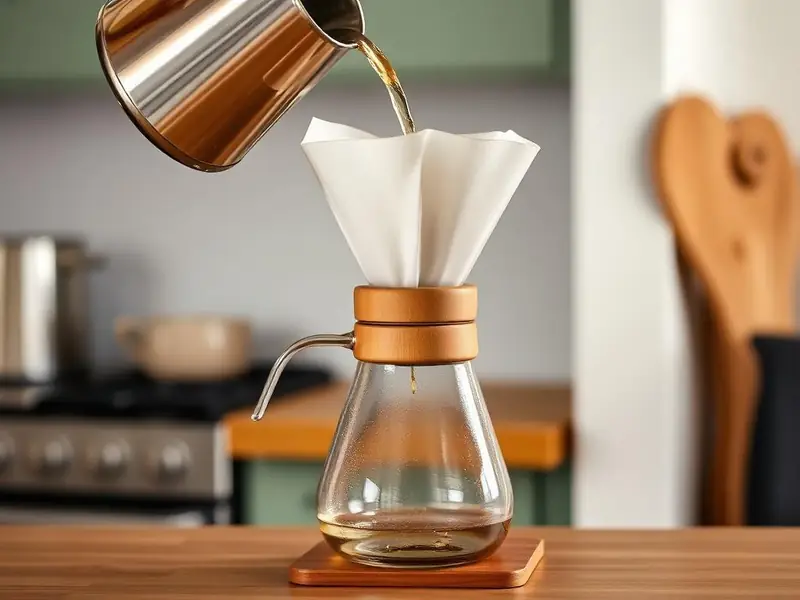
The Coffee Water Quality Guide: Why Your Water Might Be Ruining Your Cup
June 3, 2026 · 12 min read
You just spent $22 on a bag of specialty coffee, $200 on a grinder, and $150 on a pour-over kit. Then you brewed with straight tap water. If your coffee still tastes flat, dull or vaguely metallic, water is almost certainly why — a brewed cup is 98% water by weight, and its mineral content dictates how much flavor gets pulled out of the beans.
This guide walks through what actually matters about brewing water (spoiler: it's not just 'filtered'), how to test yours, and the cheapest ways to fix it — whether you're on hard tap water, soft city water, or you've already given up and are buying gallon jugs.
The two numbers that matter
Coffee water is judged mostly by two measurements:
TDS — Total Dissolved Solids
Measured in parts per million (ppm), TDS is how many minerals and organic compounds are dissolved in the water. Distilled water has TDS near 0. Hard tap water can be 400+ ppm. Coffee wants a middle ground.
General hardness (GH) and alkalinity (KH)
Hardness is mostly calcium and magnesium — the minerals that pull flavor compounds out of the coffee. Alkalinity is mostly bicarbonate, and it buffers the natural acidity of the brew. Too little alkalinity and coffee tastes sharp and sour; too much and it tastes flat and dull.
The SCA target recipe
The Specialty Coffee Association publishes a target water spec that most third-wave cafés aim for:
| Metric | Target | Acceptable range |
|---|---|---|
| TDS | 150 ppm | 75–250 ppm |
| Calcium hardness | 68 ppm (as CaCO₃) | 17–85 ppm |
| Alkalinity | 40 ppm (as CaCO₃) | 40–75 ppm |
| pH | 7.0 | 6.5–7.5 |
| Chlorine | 0 mg/L | 0 |
SCA-recommended brewing water composition.
You don't have to hit these numbers exactly. But if your tap water is wildly outside this range — say 500 ppm TDS with 200 ppm alkalinity — no amount of fresh beans and technique will make it taste right.
How to actually test your water
The fastest, cheapest option is a TDS meter — you can get a decent one for under $15.
HM Digital TDS-EZ Water Quality Tester
The $15 TDS meter that every home brewer should own.
Amazon · We may earn a commission
Stick it in a glass of your tap water and read the number. If it's between 75 and 250, you're already in the zone and just need to worry about chlorine. If it's under 40 or over 300, we need to do something.
For a more complete picture, aquarium test strips (Tetra EasyStrips 6-in-1) also give you separate GH and KH readings in about ten seconds.
Fixing hard water (TDS above 250 ppm)
Most municipal tap water in the US Midwest, Texas and southern Europe is too hard for great coffee. Two paths:
Option 1: Pitcher or countertop filter
A standard Brita will strip chlorine and drop TDS by 20–40 ppm, which is usually not enough on its own for hard water. The BWT Magnesium filter is a big upgrade — it swaps calcium for magnesium ions, which extract coffee compounds more aggressively and produce noticeably sweeter cups.
BWT Magnesium Mineralized Water Filter Pitcher
Filters chlorine and rebalances hardness toward magnesium — a real upgrade over Brita for coffee.
Amazon · We may earn a commission
Option 2: Zero-water plus mineral packets
For very hard tap water, run it through a Zero Water pitcher (which strips it down to near-0 TDS) and re-mineralize with a coffee-specific packet like Third Wave Water. This gives you SCA-target water on demand, exactly the same every day.
Third Wave Water Classic Profile — 12 pack
Mineral packets that turn distilled or RO water into SCA-target brewing water.
Amazon · We may earn a commission
Fixing soft water (TDS below 75 ppm)
If you're on soft municipal water (much of the Pacific Northwest, Scotland, parts of New England), your problem is the opposite: there aren't enough minerals to extract flavor, so coffee tastes flat and thin regardless of technique.
Third Wave Water packets solve this in the same way — dissolve one packet in a gallon of your soft tap water and you're brewing at 150 ppm TDS with a balanced mineral profile.
What about bottled water?
Not all bottled water is coffee-friendly, and some 'premium' brands are genuinely bad for brewing. Rough guide:
| Brand | TDS (approx) | Verdict for coffee |
|---|---|---|
| Crystal Geyser | ~150 ppm | Excellent — close to SCA target |
| Volvic | ~130 ppm | Very good |
| Evian | ~350 ppm | Too hard — cup tastes muted |
| Fiji | ~220 ppm | OK for medium roasts |
| Smart Water | <10 ppm | Distilled + electrolytes — flat cup unless remineralized |
| Dasani, Aquafina | varies | Reverse osmosis — flat unless remineralized |
Bottled water brands and their approximate brewing profile.
If you're going to buy bottled, Crystal Geyser is the accidental hero — it hits the SCA range naturally and costs about a dollar a gallon.
The espresso machine warning
If you have an espresso machine, water hardness matters twice as much — high-mineral water will scale up the boiler and destroy the machine in a year or two. Every espresso machine manufacturer recommends water below ~50 ppm hardness for machine longevity, which is actually softer than what coffee tastes best in. The workaround is to run softened water plus a small amount of Third Wave Water mineral to bring flavor back without adding scale-forming calcium.
Do you actually need to care about all this?
If you're using tap water for a $12 bag of grocery-store coffee, no. If you're spending $18–$25 on specialty beans, absolutely — water is the single biggest 'free' upgrade you can make to your cup after grinder and beans. A $15 TDS meter and a $16 pack of Third Wave Water can turn mediocre coffee into something genuinely great, no new gear required.
Simple starting point
If you don't want to think about this again: buy a Zero Water pitcher, buy a box of Third Wave Water Classic, and dose one packet per gallon. You'll be brewing at SCA-target water composition forever, for about $0.15 per brew.
Ready to upgrade your setup? Check our full reviews.ShopBuy it now
Shop the gear in this guide
Live Amazon listings for the products mentioned above. Prices checked September 2, 2026.


How to make brewing water for coffee
Mix brewing water with the right mineral content for sweeter, more balanced extraction.
You need
- · 1 litre distilled or RO water
- · Mineral concentrate or 0.1 g magnesium sulfate and 0.1 g sodium bicarbonate
Gear
- · Digital scale (0.01 g)
- · Clean jug
- · TDS meter (optional)
- 1
Start from a blank slate
Begin with distilled or reverse-osmosis water so you control every mineral in the cup.
- 2
Target the numbers
Aim for roughly 70–90 ppm total hardness and 40 ppm alkalinity — the SCA sweet spot for extraction and machine safety.
- 3
Add minerals
Dissolve the mineral concentrate or weighed salts into the litre of water and shake until fully clear.
- 4
Rest and use
Let the water settle for a minute, then brew. Mix fresh every few days and never use softened water in an espresso machine boiler.
Frequently asked questions
Can I use tap water for coffee?
Yes if it tastes clean and is moderately hard. Filter it to remove chlorine, and check your utility's hardness report — above about 150 ppm TDS, coffee tastes flat and machines scale quickly.
Is distilled water good for coffee?
No, not by itself. Minerals are what pull flavor compounds out of the grounds, so distilled water brews thin and hollow. Add a mineral packet like Third Wave Water instead.
Does water quality really change the taste?
Substantially. Water is over 98% of the cup, and swapping hard tap water for correctly mineralized water is usually a larger flavor change than switching beans.
Tools & deeper dives
More on espresso and brewing basics.
Recommended gear
Gear used in this guides guide
Editor-tested picks. Buying through these Amazon links keeps HomeCoffeeBrew free.
Free download
Like this guide? Get one every Sunday.
Plus our free Brew Ratio Cheat Sheet — dial-in ratios for every method, delivered instantly as a PDF.