French Press vs AeroPress vs Pour Over: Which Should You Actually Buy in 2026?
May 8, 2026 · 13 min read
French press, AeroPress, and pour over are the three manual brewing methods almost every home barista tries first. They're cheap, they don't need electricity, and any one of them will make better coffee than a $200 drip machine. The problem is that they taste completely different — and picking the wrong one for your palate is the fastest way to abandon home brewing entirely.
We spent two weeks brewing the same beans (a washed Ethiopian and a natural Colombian) through all three methods, back-to-back, with the same water and grinder. This guide walks through what each method actually tastes like, who it's for, and which one belongs on your kitchen counter.
Just deciding between two? Read French press vs pour over head-to-head.ShopThe 60-second answer
If you want deep, chocolatey, full-bodied coffee and can't be bothered with technique: French press. If you want a small, portable, do-it-all brewer that makes a clean cup and travels well: AeroPress. If you want café-quality clarity and enjoy the ritual of brewing: pour over.
At a glance: head-to-head comparison
| Method | Cup style | Effort | Learning curve | Best for | Price |
|---|---|---|---|---|---|
| French press | Heavy, oily, full-bodied | Very low | Easy | Dark roasts, mornings | $25–$50 |
| AeroPress | Clean, versatile, medium body | Medium | Easy-medium | Travel, single serve | $40 |
| Pour over (V60) | Bright, tea-like, aromatic | Medium-high | Medium-hard | Light roasts, flavor chasers | $25–$60 |
How the three methods stack up across the things that matter for a daily driver.
French press: the low-effort classic
The French press is the most forgiving brewer on this list. You dump coarse-ground coffee in the carafe, pour hot water over it, wait four minutes, press the plunger and drink. There's almost nothing to get wrong, and the metal mesh filter lets through the oils and micro-fines that give the cup its signature heavy, chocolatey body.
The tradeoff is exactly that body — French press coffee tastes muddier and less articulate than paper-filtered methods. Light, fruity Ethiopians can taste stewed. But for medium-to-dark roasts (which most people buy at the grocery store), French press is unbeatable value and takes 60 seconds of active work.
Bodum Chambord 34 oz French Press
Pros
- Almost impossible to brew a bad cup
- No paper filters — cheaper long-term
- Full-bodied, chocolatey extraction
- Great for two people at once
Cons
- Muddier cup — light roasts lose nuance
- Micro-fines end up in the last sip
- Glass carafe is fragile
AeroPress: the swiss army knife
The AeroPress is a $40 plastic cylinder that has somehow won more coffee arguments than any other brewer of the last twenty years. It uses air pressure to force water through coffee grounds and a small paper filter in under two minutes, producing a cup that sits somewhere between filter coffee and espresso — cleaner than French press, more forgiving than pour over.
The AeroPress is also the only brewer on this list that we'd genuinely call travel-friendly. It's unbreakable, weighs nothing, and can make a single cup with any grind size, any water temperature, any recipe. The downside is that it only brews one cup at a time, and the recipe rabbit hole (inverted vs standard, bypass, filter choice) can get overwhelming for beginners.
AeroPress Original
Pros
- Cheap, unbreakable, and travel-friendly
- Extremely forgiving — hard to brew a bad cup
- Endless recipe flexibility
- Cleanup takes 5 seconds
Cons
- One cup at a time
- Recipe options can feel overwhelming at first
- Not the cleanest cup — some fines slip through
Pour over: for flavor chasers
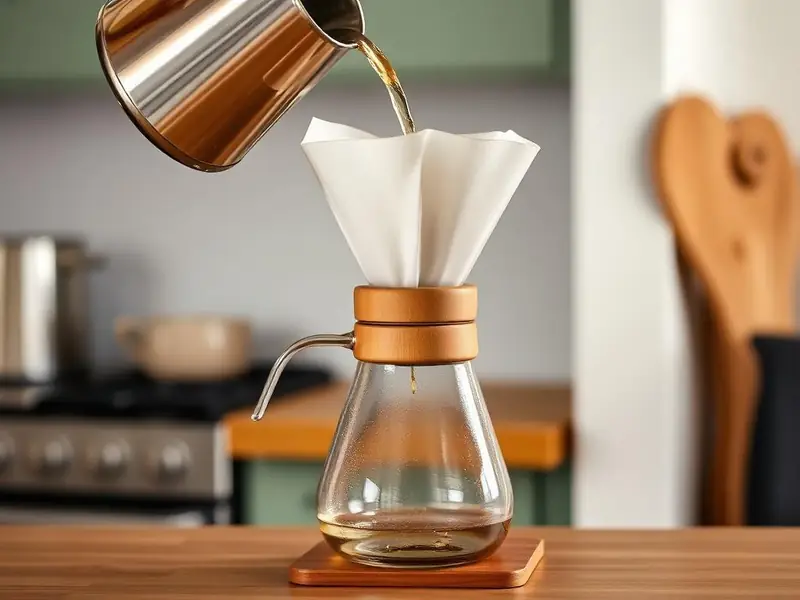
Pour over is the method most competitive baristas brew at home. Water is poured in slow, deliberate circles over medium-ground coffee sitting in a paper-filter cone. The paper strips oils and micro-fines, leaving a clean, articulate cup that lets a good bean's origin character shine through.
Pour over rewards attention. Grind size, pour rate, bloom time and water temperature all matter, and your first few brews may taste sour or bitter. But once you dial it in — usually within a week — nothing else at home tastes as bright, aromatic and expensive.
If pour over sounds like your speed, start with our guide to the
5 best pour over coffee makers of 2026ShopHario V60 02 Ceramic
Pros
- Cleanest, most aromatic cup of the three
- Cheap to get into
- Massive online recipe community
- Best method for light-roast specialty coffee
Cons
- Learning curve is real
- Really needs a gooseneck kettle
- Slower on busy mornings
How they taste side-by-side
We brewed the same 20 g of a washed Ethiopian at three different grind sizes (coarse for French press, medium-fine for AeroPress, medium for V60) with 300 g of 96°C water. The French press pulled out heavy stone-fruit and cocoa notes with a syrupy body. The AeroPress produced a cleaner cup, still fruity, with a lighter texture. The V60 was the most articulate — clear jasmine, lemon and bergamot, thinner mouthfeel.
The same beans through three brewers taste like three different coffees. There's no 'best' cup — only the one you prefer.
What you'll actually need to buy
All three methods share the same real bottleneck: your grinder. A pre-ground bag of grocery-store coffee will make mediocre coffee in any brewer. If you're starting from zero, spend more on the grinder than the brewer.
1Zpresso J-Max Hand Grinder
The best sub-$200 grinder for any of these three methods.
Amazon · We may earn a commission
You'll also want a scale that reads in 0.1 g increments (the Timemore Black Mirror is $50 and everywhere) and — for pour over specifically — a gooseneck kettle. Fellow's Stagg EKG is the gold standard; the Cosori variant is $70 and 90% as good.
So which one should you buy?
Buy the French press if…
You drink medium or dark roasts, want the lowest possible effort in the morning, and often brew for two people. It's also the cheapest total setup.
Buy the AeroPress if…
You brew one cup at a time, travel or commute with coffee gear, or want a single brewer that can imitate every other method.
Buy the pour over if…
You buy specialty light roasts, enjoy the ritual of brewing, and care about tasting the difference between origins. This is the method that will keep pulling you deeper for years.
The honest truth
You'll probably end up owning all three. They're all under $50, they all fit in one drawer, and each one is genuinely the best tool for different situations. If we had to pick one to keep on the counter forever, it'd be the AeroPress — but only barely, and only because it's the most flexible.
Ready to upgrade your setup? Check our full reviews.ShopBuy it now
Shop the gear in this guide
Live Amazon listings for the products mentioned above. Prices checked September 2, 2026.


How to brew coffee in a French press
Brew a full-bodied French press at a 1:15 ratio with a clean, grit-free finish.
You need
- · 33 g coarsely ground coffee
- · 500 g water at 96°C
Gear
- · French press
- · Digital scale
- · Burr grinder
- · Kettle
- 1
Preheat and dose
Rinse the press with hot water, then add 33 g of coarsely ground coffee.
- 2
Pour and start the timer
Add all 500 g of 96°C water at once and start a four-minute timer.
- 3
Break the crust
At four minutes, stir the floating crust with a spoon so the grounds sink.
- 4
Skim and wait
Skim off the foam and remaining floaters, then let the brew rest undisturbed for five more minutes.
- 5
Press gently and serve
Push the plunger down slowly to just below the surface and decant immediately so the coffee stops extracting.
Frequently asked questions
Which method makes the strongest coffee?
AeroPress, because you can brew at a 1:8 concentrate ratio and dilute to taste. French press at 1:15 is full-bodied but not stronger in dissolved solids.
Which method is easiest to clean?
AeroPress — eject the puck into the bin and rinse, about ten seconds. French press requires disposing of wet grounds and washing the mesh plunger.
Which is best for a light roast?
Pour over. Its paper filter and even extraction highlight the florals and acidity that light roasts are prized for, while French press mutes them.
Tools & deeper dives
More on pour over, aeropress and french press.
Recommended gear
Gear used in this guides guide
Editor-tested picks. Buying through these Amazon links keeps HomeCoffeeBrew free.
Free download
Like this guide? Get one every Sunday.
Plus our free Brew Ratio Cheat Sheet — dial-in ratios for every method, delivered instantly as a PDF.