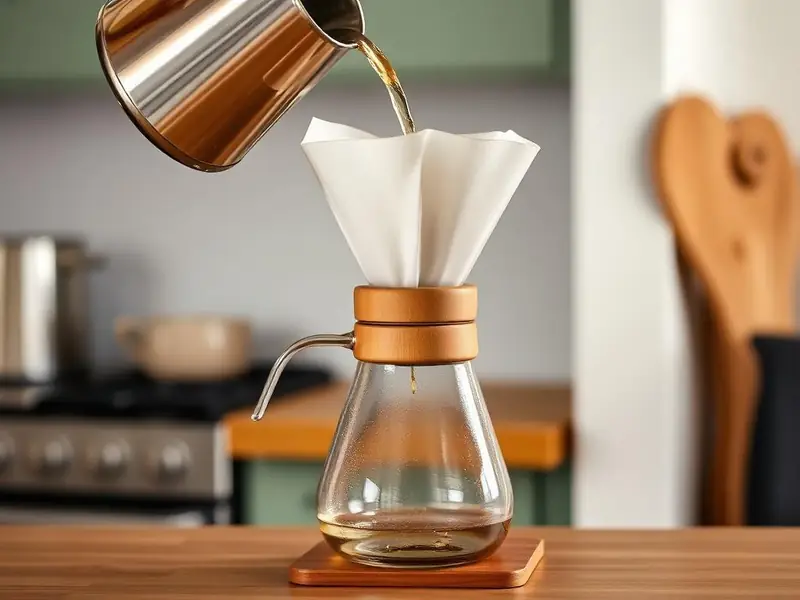
French press and pour over are the two most popular manual brewing methods in the world, and they sit at opposite ends of the flavour spectrum. A French press steeps ground coffee in hot water and filters it through metal, so oils and fine particles stay in the cup. A pour over runs water through a bed of coffee and a paper filter, so the cup comes out clean, bright and tea-like. Neither is better — they make genuinely different drinks.
This guide compares them on the six things that actually decide which one you will use every morning: taste, effort, consistency, cost, cleanup and how forgiving each one is with cheap beans and a cheap grinder.
French press vs pour over at a glance
| French press | Pour over | |
|---|---|---|
| Brew style | Full immersion, metal filter | Percolation, paper filter |
| Body | Heavy, oily, syrupy | Light, clean, tea-like |
| Clarity | Low — fines and oils stay in | High — paper traps oils and fines |
| Active time | 1 minute (mostly waiting) | 3–4 minutes of pouring |
| Total time | ~5 minutes | ~3.5 minutes |
| Grind | Coarse | Medium-fine |
| Ratio | 1:15 (33 g / 500 g) | 1:16 (22 g / 350 g) |
| Learning curve | Very easy | Medium — pour rate matters |
| Consistency | High, hard to ruin | Varies with technique |
| Cleanup | Messy — wet grounds in the carafe | Easy — lift out the paper filter |
| Entry cost | $40 press + grinder | $25 dripper + grinder |
| Best for | Rich, low-effort mugs and batches | Bright, complex single cups |
Head-to-head comparison of French press and pour over brewing.
Taste: oils and body versus clarity and acidity
The metal mesh in a French press has holes far larger than coffee's soluble oils, so those oils — and a fine layer of sediment — end up in your mug. That gives you a heavy, rounded, almost chocolatey cup with a coating mouthfeel. It flatters darker roasts, chocolate-and-nut Latin American coffees and anything you want to drink with milk.
A paper filter in a V60 or Chemex removes most of those oils and all the fines. What is left is clarity: you taste the individual notes rather than one blended impression. Floral Ethiopians, citric Kenyans and delicate washed coffees only really make sense through paper. If you have ever paid $22 for a bag of light-roast beans and wondered why they tasted muddy, brewing them in a French press is usually the reason.
One health note worth knowing: unfiltered coffee contains cafestol and kahweol, diterpenes that can raise LDL cholesterol. Paper filters remove almost all of them; a metal French press screen does not. If you drink four or more cups a day and watch your cholesterol, that is a real argument for pour over.
Effort and consistency: which is harder to get wrong?
French press is close to foolproof. Coarse grind, boiling water off the boil, stir, wait four minutes, break the crust, press slowly. Even a mediocre grinder produces a drinkable cup because immersion extracts everything evenly over time. It is the method to choose if you brew before you are properly awake.
Pour over rewards attention. Your pour rate, bloom, grind size and water temperature all change the result, which is exactly why enthusiasts love it and beginners sometimes give up. The good news is that the variables are learnable in a week, and a gooseneck kettle plus a scale removes most of the guesswork.
Cost: what each setup really costs
| Item | French press | Pour over |
|---|---|---|
| Brewer | Bodum Chambord — $40 | Hario V60 02 — $25 |
| Filters | None (metal screen) | ~$6 per 100 |
| Kettle | Any kettle | Gooseneck strongly recommended |
| Grinder | Coarse-capable burr grinder | Burr grinder, medium-fine |
| Scale | Optional | Strongly recommended |
| Typical total | ~$120 | ~$150 |
Realistic starting cost for each method, including the gear that actually matters.
Both methods live or die on the grinder, not the brewer. A $40 French press with a burr grinder beats a $300 machine with pre-ground coffee every single time. If your budget is $150 total, spend $110 of it on grinding.
Bodum Chambord French Press (34 oz)
Pros
- Brews 3–4 mugs in one go
- Almost impossible to get wrong
- No filters to buy, ever
- Classic borosilicate and steel build
Cons
- Sediment in the last inch of the cup
- Glass carafe is breakable
- Messy to clean out
Hario V60 02 Ceramic Dripper
Pros
- Exceptional clarity and sweetness
- Cheapest serious brewer in coffee
- Ceramic holds brew temperature
- Filters are cheap and everywhere
Cons
- Technique-sensitive
- One or two cups at a time
- Really wants a gooseneck kettle
The gear that makes either method work
Baratza Encore ESP
The one upgrade that improves both methods — even grind from coarse press to fine espresso.
Amazon · We may earn a commission
Fellow Stagg EKG Gooseneck Kettle
Temperature control and a slow, aimable pour — the single biggest pour over upgrade.
Amazon · We may earn a commission
Timemore Black Mirror Basic 2 Scale
0.1 g resolution with a built-in timer so every brew is repeatable.
Amazon · We may earn a commission
Chemex 6-Cup Classic
Pour over for a whole table — thick filters, exceptionally clean cup.
Amazon · We may earn a commission
How to brew the perfect French press
Use 33 g of coarsely ground coffee to 500 g of water (1:15). Heat water to 200°F / 93°C. Pour all the water in, start a timer, and stir once to wet every ground. At four minutes, break the floating crust with a spoon and skim off the foam and floating grounds. Wait another five minutes if you want a cleaner cup, then press the plunger down slowly and decant immediately — coffee left sitting on the grounds keeps extracting and turns bitter.
How to brew the perfect pour over
Use 22 g of medium-fine coffee to 350 g of water (1:16) at 205°F / 96°C. Rinse the paper filter with hot water and discard the rinse. Add the coffee, level the bed, then pour 60 g of water and wait 45 seconds for the bloom. Pour in slow, steady circles to 200 g, pause, then finish to 350 g. Total brew time should land between 3:00 and 3:30. If it drains faster, grind finer; if it stalls past four minutes, grind coarser.
Get exact doses for any brewer with our free brew ratio calculator.ShopSo which should you buy?
Buy a French press if you want a rich, forgiving cup with almost no technique, brew for more than one person, or drink your coffee with milk. Buy a pour over if you buy interesting single-origin beans, enjoy the ritual, and want the cleanest, sweetest, most nuanced version of what is in the bag.
Honestly? Buy both. Together they cost less than $70, and most people who brew seriously at home keep a press for weekends and batches and a dripper for weekday single cups. The grinder is shared, so the second brewer is nearly free.
Not sure where to start? Take the 30-second setup quiz.Shop See how both compare against the AeroPress in our three-way test.Shop Ready to upgrade your setup? Check our full reviews.ShopBuy it now
Shop the gear in this guide
Live Amazon listings for the products mentioned above. Prices checked September 2, 2026.


Frequently asked questions
Is French press or pour over better?
Neither is objectively better. French press gives more body and is nearly impossible to get wrong; pour over gives more clarity and sweetness but depends on grind size and pour technique. Dark roasts and milk drinks favour French press; light single origins favour pour over.
Does French press taste stronger than pour over?
It tastes heavier, not necessarily stronger. The metal filter lets oils and fine particles through, which reads as body and richness. Actual strength depends on the ratio — 1:15 for French press versus 1:16 for pour over.
Which is healthier, French press or pour over?
Pour over. Paper filters remove cafestol and kahweol, oils in unfiltered coffee that can raise LDL cholesterol. A French press metal screen leaves them in the cup.
What grind do I need for French press vs pour over?
Coarse, sea-salt-sized grounds for French press to avoid sludge, and medium-fine, table-salt-sized grounds for pour over so the brew drains in about three and a half minutes.
Which is cheaper to start with?
Pour over, slightly. A Hario V60 costs about $25 plus cheap paper filters, while a Bodum Chambord French press is about $40 with no filters to buy. Both need the same burr grinder, which is the real cost.
Tools & deeper dives
More on pour over and french press.
Recommended gear
Gear used in this guides guide
Editor-tested picks. Buying through these Amazon links keeps HomeCoffeeBrew free.
Free download
Like this guide? Get one every Sunday.
Plus our free Brew Ratio Cheat Sheet — dial-in ratios for every method, delivered instantly as a PDF.