The Complete Home Coffee Setup Guide 2026 — Gear, Ratios and Method
August 9, 2026 · 18 min read
This is the guide we wish we'd had when we started. It covers every decision that actually changes what's in your cup — grinder, ratio, water, temperature, beans and brewer — in the order that matters, plus three complete setups you can buy today at $100, $300 and $1,000.
The 80/20 of home coffee
Four variables account for most of the difference between a flat, bitter mug and something you'd happily pay $6 for: grind evenness, dose accuracy, water chemistry and brew temperature. Brewer choice — the thing most beginners obsess over — is a distant fifth. Fix the first four with $200 and almost any dripper will make excellent coffee.
| Upgrade | Typical cost | Impact on cup | Buy it when |
|---|---|---|---|
| Burr grinder | $150-$200 | Very high | First, always |
| 0.1 g scale | $25 | High | First week |
| Fresh beans (<21 days) | $18/bag | High | Immediately |
| Filtered water | $30 | Medium-high | If your tap is hard |
| Gooseneck kettle | $45-$100 | Medium | For pour over |
| Better brewer | $25-$500 | Low-medium | Last |
Where your money actually goes in cup quality. Percentages are our tasting-panel estimates, not lab figures.
1. The grinder is the whole game
Blade grinders chop beans into a mix of boulders and dust. The dust over-extracts into bitterness while the boulders under-extract into sourness, and no ratio or technique can fix that. A burr grinder crushes beans between two surfaces set a fixed distance apart, so particles come out roughly the same size and extract at roughly the same rate.
Hand grinders punch above their price: a $165 1Zpresso J-Max has burrs that outclass most $400 electrics, at the cost of 40 seconds of cranking. If you brew for one or two people, buy manual. If you brew for a household or want espresso on a weekday morning, buy electric.
Baratza Encore ESP
Pros
- Handles espresso, filter and moka on one grinder
- Serviceable — parts available for a decade
- 40 grind steps with usable espresso range
Cons
- Louder than premium electrics
- Static on very dry days
1Zpresso J-Max
8.8-micron adjustment steps — espresso-capable in a hand grinder.
Amazon · We may earn a commission
2. Weigh everything (yes, really)
Scoops are wrong. A level tablespoon of dense Central American beans weighs several grams more than the same scoop of a light, fluffy Ethiopian natural, so your ratio swings by 15% cup to cup without you touching anything. A $25 scale with 0.1 g resolution and a built-in timer removes that variable permanently.
Timemore Black Mirror Basic 2
0.1 g resolution, fast response, built-in brew timer.
Amazon · We may earn a commission
3. Ratios for every method
Coffee-to-water ratio is written as 1:N by weight. 1:16 is the modern filter standard. Espresso runs far tighter, immersion methods slightly looser, cold brew tighter because you dilute afterwards. Use this table as your starting point, then adjust one notch at a time.
| Method | Ratio | Example dose | Grind | Water temp |
|---|---|---|---|---|
| Pour over (V60) | 1:16 | 22 g / 350 g | Medium-fine | 205°F / 96°C |
| Chemex | 1:16.5 | 30 g / 500 g | Medium-coarse | 205°F / 96°C |
| AeroPress | 1:14 | 18 g / 250 g | Medium-fine | 185-200°F |
| French press | 1:15 | 33 g / 500 g | Coarse | 200°F / 93°C |
| Espresso | 1:2 | 18 g in / 36 g out | Fine | 200°F / 93°C |
| Moka pot | 1:10 | 18 g / 180 g | Fine-medium | Pre-boiled |
| Cold brew | 1:8 concentrate | 100 g / 800 g | Coarse | Room temp, 16 h |
Starting ratios by method. Adjust in single steps and change only one variable per brew.
4. Water is 98% of your cup
Coffee is a solvent extraction, and hard, mineral-heavy water saturates fast and pulls less flavour — while zero-TDS distilled water tastes hollow and flat. Aim for roughly 75-150 ppm total hardness with about 40 ppm alkalinity. A cheap carbon filter pitcher gets most tap water into range; if you live somewhere very hard, third-wave water sachets in distilled water are the reliable fix.
Brita Everyday Water Filter Pitcher
Cheapest meaningful water upgrade for most tap supplies.
Amazon · We may earn a commission
5. Beans: roast date beats everything on the label
Ignore 'best before'. Look for a roast date and buy whole beans 3-21 days old. Under three days the coffee is still degassing and brews unevenly; past about a month the aromatics have faded regardless of how well you store it. Buy 250-340 g at a time and store it airtight, opaque and at room temperature — not in the freezer door, not in the fridge.
Airscape Coffee Storage Canister
Plunger lid pushes air out — keeps beans tasting fresh for weeks.
Amazon · We may earn a commission
6. Choose your brewer by the cup you actually want
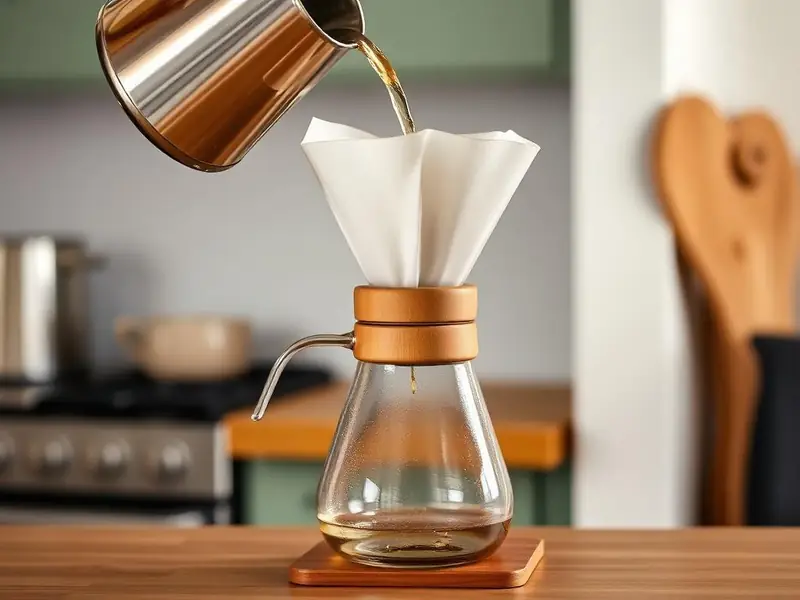
There is no best brewer, only a best match for your taste and your mornings. Want clarity, florals and a clean finish? Pour over. Want body, richness and zero technique? French press. Want speed and forgiveness? AeroPress. Want milk drinks? Espresso, and budget for the grinder before the machine.
| You want | Brewer | Time | Cost | Difficulty |
|---|---|---|---|---|
| Clean and bright | Hario V60 | 3.5 min | $25 | Medium |
| Rich and heavy | French press | 5 min | $40 | Easy |
| Fast and forgiving | AeroPress | 2 min | $40 | Easy |
| Hands-off batches | OXO Brew 8-Cup | 6 min | $200 | Easy |
| Lattes and cappuccinos | Breville Bambino Plus | 3 min | $499 | Hard |
Match the brewer to the cup you want and the time you have.
Hario V60 Ceramic Dripper 02
The most versatile $25 in coffee — clarity, control and cheap filters.
Amazon · We may earn a commission
7. Three complete setups you can buy today
The $100 setup — better than most cafés
1Zpresso Q2 hand grinder ($109 — or a Hario Skerton at $50 if you're strict), Hario V60 with filters ($25), a basic 0.1 g scale ($25). Boil a normal kettle and wait 30 seconds instead of buying a gooseneck. This makes genuinely excellent filter coffee.
The $300 setup — the sweet spot
Baratza Encore ESP ($199), Timemore Black Mirror scale ($59), Hario V60 ($25) and an AeroPress for travel and quick mornings ($40). Add a gooseneck kettle when the budget recovers. This is where most enthusiasts stop and never feel like they're missing anything.
The $1,000 setup — espresso and milk at home
Breville Bambino Plus ($499), Eureka Mignon Specialita or Encore ESP depending on budget ($199-$599), a bottomless portafilter, a WDT tool and a 0.1 g scale. Expect a genuine learning curve of two or three weeks before your shots are reliably good — that is normal, not a faulty machine.
Breville Bambino Plus
Three-second heat-up and automatic milk texturing in a tiny footprint.
Amazon · We may earn a commission
8. Troubleshooting: read your cup
Sour, thin, finishes fast? Under-extracted — grind finer, brew hotter or extend contact time. Bitter, dry, lingering harshness? Over-extracted — grind coarser, cool the water slightly or shorten the brew. Weak but not sour? That's strength, not extraction: add coffee and keep the ratio tighter at 1:15.
| Symptom | Likely cause | Fix |
|---|---|---|
| Sour, sharp | Under-extraction | Grind finer / hotter water |
| Bitter, drying | Over-extraction | Grind coarser / shorter brew |
| Thin and watery | Ratio too loose | Move 1:16 → 1:15 |
| Muddy, silty | Grinder fines | Coarser + better grinder |
| Flat, no aroma | Stale beans | Buy within 21 days of roast |
| Brew drains too fast | Grind too coarse | Grind finer, pour slower |
One change at a time. Brew, taste, note it, repeat.
9. A repeatable morning routine
Weigh 22 g of beans. Boil water and let it sit 30 seconds. Rinse the filter. Grind. Bloom with 60 g of water for 45 seconds. Pour to 350 g in two steady additions. Total brew time 3:00-3:30. Note the grind setting and the taste. Change one thing tomorrow. That loop — not new gear — is what turns good coffee into consistently great coffee.
The short version
Buy a burr grinder before anything else. Weigh your coffee and water at 1:16. Use filtered water at 195-205°F. Buy beans with a roast date inside three weeks. Pick the brewer that matches the cup you like, and change one variable at a time until it tastes right.
See every piece of gear we recommend, tested and ranked.Shop Ready to upgrade your setup? Check our full reviews.ShopBuy it now
Shop the gear in this guide
Live Amazon listings for the products mentioned above. Prices checked September 2, 2026.


Frequently asked questions
What do I need to start making good coffee at home?
A burr grinder, a 0.1 g scale, a brewer such as a V60 or AeroPress, filtered water and beans roasted within the last three weeks. That is about $150-$250 total and beats most café coffee.
What should I buy first, a grinder or a brewer?
The grinder. An even grind improves extraction more than any brewer upgrade, so a $180 grinder with a $25 dripper beats a $500 machine with pre-ground coffee.
How much coffee per cup should I use?
Use a 1:16 coffee-to-water ratio by weight: 22 g of coffee to 350 g of water for a large mug. Go to 1:15 for a stronger cup and 1:17 for a lighter one.
Is an expensive home coffee setup worth it?
Only after the basics. Grinder, scale, fresh beans and water quality account for most of the cup. Spending beyond about $400 mostly buys convenience, consistency and milk drinks rather than better flavour.
What is the best budget home coffee setup in 2026?
A 1Zpresso Q2 or Baratza Encore grinder, a Hario V60 or AeroPress, a Timemore Black Mirror scale and a gooseneck kettle — roughly $200-$250 depending on whether you grind by hand.
Tools & deeper dives
More on grinders, budget coffee, beginners and brewing basics.
Recommended gear
Gear used in this guides guide
Editor-tested picks. Buying through these Amazon links keeps HomeCoffeeBrew free.
Free download
Like this guide? Get one every Sunday.
Plus our free Brew Ratio Cheat Sheet — dial-in ratios for every method, delivered instantly as a PDF.