Coffee for a Crowd at Home: Batch Sizes, Ratios and Timing
November 22, 2026 · 5 min read
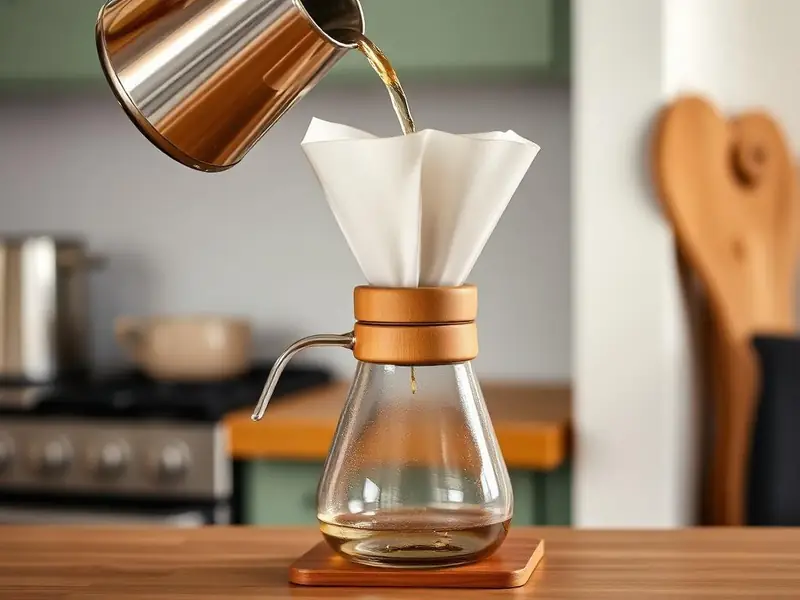
Serving coffee to guests is mostly a planning problem, not a reason to buy a commercial urn. Decide the actual mug size, count likely coffee drinkers and check what your brewer can handle per batch. Then prepare measured coffee and a serving plan before guests arrive. A machine advertised as eight cups often means smaller cups than the mugs in your kitchen, so do not translate the label directly into eight guests.
Plan drink volume first
For a first round, use 200 ml per person as a planning assumption and ask whether guests want coffee, tea or decaf. Six coffee drinkers need about 1.2 liters of beverage; twelve need about 2.4 liters. Grounds retain some water, so brewing-water volume is not identical to final beverage volume. If mugs are larger, or several people want refills, plan another batch rather than trying to force excess water through one basket.
| Coffee drinkers | First-round beverage target | Practical approach |
|---|---|---|
| 4 | About 800 ml | One suitable home-brewer batch |
| 6 | About 1.2 liters | Check capacity; expect some shortfall or a top-up |
| 8 | About 1.6 liters | Two manageable batches for many home brewers |
| 12 | About 2.4 liters | Multiple batches and a serving plan |
Planning example assumes 200 ml per guest; actual mug sizes and refill demand vary.
Use a measured starting ratio
A 1:16 coffee-to-water ratio is a workable filter-coffee starting point. That is 50 g coffee for 800 g brewing water, or about 62.5 g for 1,000 g water. It describes water going into the brewer, not the beverage you will pour into mugs. Keep within both the reservoir and basket limits. When using an automatic machine, its manual’s dose and water guidance comes before a generic scaled recipe.
| Brewing water | Coffee at 1:16 | Capacity reminder |
|---|---|---|
| 800 g | 50 g | Check basket and reservoir |
| 1,000 g | 62.5 g | Round sensibly for your scale |
| 1,200 g | 75 g | Not safe for every eight-cup machine |
| 1,600 g | 100 g | Split if the machine cannot handle it |
These are ratio calculations, not guaranteed final beverage yields.
OXO’s guidance for its eight-cup brewer specifies approximately eight grams per five-fluid-ounce cup. That is a different starting convention from a strict 1:16 recipe, and it highlights why manufacturer cup markings matter. Use the correct basket, filter and carafe setting for the batch. Do not assume a reservoir mark means an eight-ounce serving. Our drip-coffee maker comparison can help assess the equipment you already have.
Do not multiply a small pour-over recipe blindly
A bigger dose makes a deeper coffee bed and can change drainage. Two familiar batches are often easier to manage than one overloaded dripper. If you use a Chemex, stay within the vessel and filter limits and preserve a vent path according to the maker’s instructions. Start with a known recipe for that brewer size; adjust grind and pouring from taste rather than forcing the same brew time as a single mug.
A French press is another option if your guests like a fuller, more textured cup. Its nominal capacity also needs room for grounds and safe handling. Serve promptly after brewing rather than leaving coffee sitting on the grounds through the entire meal. Our French press recipe for two is useful for a small second round, while Chemex versus V60 explains the batch-size trade-off.
A calm hosting schedule
Before guests arrive, clean the brewer, check filters and water, and pre-weigh separate doses into labeled containers. Keep whole beans sealed until grinding. Set out mugs, spoons, milk and a clear decaf label. If you are using ground coffee, prepare only what you need for the event rather than leaving an entire bag open on the counter. Brew close to serving, allowing time for a second batch if the first carafe will not cover everybody.
For thermal serving, follow the vessel’s instructions for preheating and closing the lid. A thermal carafe avoids continuously heating brewed coffee on a plate, but it does not preserve flavor indefinitely. Make smaller fresh rounds when feasible. Keep hot containers away from edges and children; never transfer freshly brewed coffee into an unsuitable glass bottle. Serve dairy separately and follow the food-safety instructions on its packaging.
Equipment choices for different hosting styles
OXO Brew 8-Cup Coffee Maker
Pros
- Automatic carafe brewing for repeatable batches
- Thermal serving format
Cons
- Eight maker-defined cups are not eight large mugs
- Check the correct basket setup for the dose
Chemex 6-Cup Classic
Pros
- Manual batch brewing with paper filtration
- Useful when you enjoy pouring and can attend the brew
Cons
- Requires compatible filters and careful handling
- Six cup label does not establish six full mug servings
Bodum Chambord 8-Cup French Press
Pros
- Immersion brewing without disposable paper filters
- A fuller-bodied alternative for the table
Cons
- Some sediment is part of the method
- Pour out after brewing rather than leaving it on grounds
Baratza Encore
Pros
- Filter-oriented grind adjustments
- Useful for preparing separate fresh doses
Cons
- Grinding takes time and makes noise
- Pre-ground coffee may be more convenient for occasional hosting
Make a refill plan instead of overspending
Ask who wants another cup before starting the next batch. This reduces waste and lets you offer decaf without making a second large pot nobody drinks. Coffee strength and caffeine content are not interchangeable, so do not describe a darker or more diluted cup as a precise caffeine dose. If you offer decaf, remember that it can contain residual caffeine; our decaf brewing guide keeps the focus on flavor and practical preparation.
For a recurring brunch, record how much was actually consumed and how many batches you made. That evidence is more useful than buying the largest brewer available. Your normal weekday routine should still influence the purchase. If hosting is occasional, borrow equipment or make multiple batches before committing counter space and money to a new machine.
Machine-specific source: OXO, How to Brew Single Cup and Full Carafes with the OXO 8-Cup Coffee Maker, https://www.oxo.com/blog/coffee-and-beverages/how-to-brew-single-cup-coffee-maker.
Calculate coffee and water for your next batchShopBuy it now
Shop the gear in this guide
Live Amazon listings for the products mentioned above. Prices checked September 2, 2026.


Frequently asked questions
Does an eight-cup coffee maker serve eight people?
Not necessarily. Maker-defined cups can be much smaller than household mugs; compare the actual reservoir and beverage volume.
How much coffee do I need for one liter of brewing water?
At a 1:16 starting ratio, use 62.5 g coffee for 1,000 g water, unless your machine’s instructions specify another dose.
Can I double any pour-over recipe?
Not reliably. A deeper coffee bed changes flow and may exceed the dripper’s capacity. Two familiar batches can be easier.
Tools & deeper dives
More on brewing basics.
Recommended gear
Gear used in this guides guide
Editor-tested picks. Buying through these Amazon links keeps HomeCoffeeBrew free.
Free download
Like this guide? Get one every Sunday.
Plus our free Brew Ratio Cheat Sheet — dial-in ratios for every method, delivered instantly as a PDF.
Keep reading
More gear reviews and city guides
Product reviews
- Baratza Encore ESP · Grinder
- Baratza Encore · Grinder
- Fellow Opus · Grinder
- Eureka Mignon Specialita · Grinder
- 1Zpresso J-Max · Grinder
- 1Zpresso JX-Pro · Grinder
- Breville Bambino Plus · Espresso
- Breville Barista Pro · Espresso
- Gaggia Classic Pro · Espresso
- Rancilio Silvia Pro X · Espresso
- Hario V60 02 Ceramic · Pour-Over
- Chemex 6-Cup Classic · Pour-Over
- Kalita Wave 185 Stainless · Pour-Over
- Fellow Stagg EKG · Kettle
- Fellow Stagg [X] Pour-Over Set · Kettle
- Timemore Black Mirror Basic 2 · Scale
- Timemore Black Mirror Nano · Scale
- Hario V60 Drip Scale · Scale
- Acaia Pearl S · Scale
- AeroPress Original · Immersion
- AeroPress Go · Immersion
- Bodum Chambord 8-Cup French Press · Immersion
- Bialetti Moka Express 6-Cup · Immersion
- Bialetti Venus Stainless · Immersion
- Toddy Cold Brew System · Immersion
- Bonavita BV1900TS 8-Cup · Drip & Pod
- OXO Brew 8-Cup Coffee Maker · Drip & Pod
- OXO Brew Compact Single Serve · Drip & Pod
- Keurig K-Elite · Drip & Pod
- Nespresso Vertuo Next · Drip & Pod
- Third Wave Water Classic Profile · Water & Storage
- BWT Magnesium Filter Pitcher · Water & Storage
- HM Digital TDS-EZ Meter · Water & Storage
- Airscape Coffee Canister · Water & Storage
- Fellow Atmos Vacuum Canister · Water & Storage