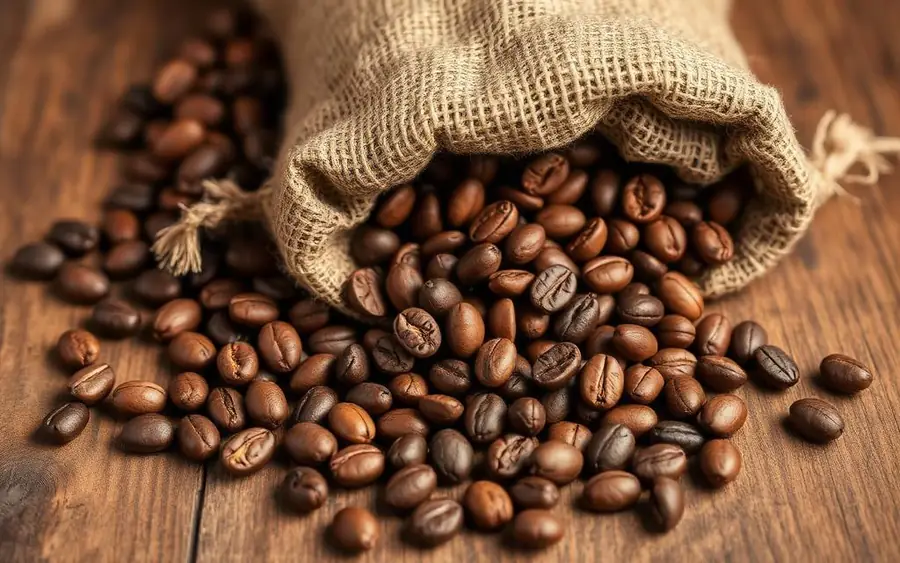
Decaf does not have to taste like a compromise. Start with whole beans you enjoy, measure the dose, and treat the first cup as a calibration rather than a verdict. Decaffeination, roast style and freshness all affect how a bean behaves, so copying a recipe from a different bag can leave you with a flat or harsh drink. This guide gives you sensible starting points and a way to adjust them without buying an entirely new setup.
Choose decaf by flavor, not just the process name
Look for a roast date where available, a clear description of the roast, and tasting notes that sound appealing. Chocolate, nuts and caramel are approachable choices if you drink coffee with milk. Fruit-forward notes can work well for black filter coffee. Process labels such as Swiss Water, sugarcane ethyl acetate and carbon dioxide describe decaffeination methods; they do not guarantee that one bag will taste better than another. Try a small bag first and compare it with your usual coffee using the same brewer.
Decaf is not necessarily caffeine-free. The remaining amount varies by coffee and preparation, and a process label is not a precise caffeine measurement. If you need to avoid caffeine for a medical reason, ask your clinician about an appropriate limit rather than assuming unlimited decaf is suitable. We focus here on brewing flavor, not health claims.
A balanced decaf pour-over starting recipe
| Variable | Starting point |
|---|---|
| Coffee | 20 g whole-bean decaf |
| Water | 320 g total |
| Grind | Medium; adjust after tasting |
| Temperature | About 93°C / 199°F |
| Bloom | 60 g water for 30–45 seconds |
| Remaining water | Pour steadily to 320 g total |
Preheat the dripper and mug, rinse the paper filter if its instructions allow, and discard the rinse water. Grind immediately before brewing. Add the coffee, start a timer and wet the bed evenly with the bloom water. After the bloom, add the remaining water in two or three gentle pours. The 320 g includes the bloom, so do not add another 320 g afterward. Let it drain, swirl the finished drink and allow it to cool slightly before deciding what to change.
A total time around three minutes can be a useful reference, but it is not a pass/fail target. Some decaf beans drain more slowly than your regular beans at the same grinder setting. If the bed stalls and the cup tastes drying, try a little coarser or reduce vigorous stirring. If it drains quickly and tastes thin or sharply sour, try finer. Use our grind-size chart to compare methods and the ratio calculator to resize the dose.
Make decaf espresso without chasing a fixed shot time
Use the dose recommended for your basket; 18 g in and 36 g out is a starting recipe only for a basket suited to that dose. Keep dose and yield fixed while adjusting grind. If the shot tastes sharp and lacks sweetness, try a slightly finer setting or a longer yield. If it is harsh and drying, try coarser or a shorter yield. These are directions to investigate, not universal diagnoses: uneven puck preparation can produce mixed flavors. Consult the espresso dial-in guide for a controlled adjustment sequence.
When switching between regular and decaf, record the setting for each bag and follow the grinder instructions for clearing retained grounds. Retention means the first dose after switching may contain some of the previous coffee. A single-dose routine can make switching easier, but it does not establish that a grinder is completely free of caffeine-containing residue. If that distinction matters to you, keep separate equipment.
Buy only the equipment that solves a problem
Baratza Encore
Pros
- Adjustable burr grinding for filter coffee
- Useful when pre-ground decaf limits recipe adjustments
Cons
- Not the best choice for fine espresso adjustment
- Requires counter space and electricity
Hario V60 02 Ceramic
Pros
- Paper-filter brewing for clear black coffee
- Recipe scales easily for a single large mug
Cons
- Needs compatible filters
- Pouring technique affects consistency
Baratza Encore ESP
Pros
- Espresso and filter adjustment ranges
- A practical option when switching brewing methods
Cons
- Changing methods requires resetting the grind
- Retained grounds still need attention
Airscape Coffee Canister
Pros
- Reusable opaque storage for whole beans
- Convenient for keeping regular and decaf separate
Cons
- Does not reverse staling
- Check the size against your bag quantity
Troubleshoot before replacing the beans
| Cup or brew problem | First check | One adjustment to try |
|---|---|---|
| Thin but pleasant | Coffee-to-water ratio | Use slightly more coffee for the same water |
| Sharp and weak | Grind and even wetting | Try slightly finer with the same dose |
| Drying and slow to drain | Fine particles and agitation | Try coarser and gentler pours |
| Flat across several recipes | Bean freshness and water | Compare a fresh bag or different brew water |
Make one change at a time and keep a short note: dose, water, grinder setting and a plain-language taste description. A week of notes is more useful than assuming decaf always requires hotter water or a particular grind. If regular and decaf both taste dull, investigate the water and cleaning routine before blaming decaffeination. Our water-quality guide covers the shared variables.
Store decaf as carefully as regular coffee
Keep the beans sealed, away from sunlight, heat and moisture, and buy quantities you can use while they still taste good. There is no single freshness deadline that applies to every roast and package. If you drink decaf occasionally, portioning and freezing beans in airtight containers can be more practical than opening a large bag for months; allow a sealed portion to warm before opening to limit condensation. See the bean-storage guide for more options.
Find gear for your decaf routineShopBuy it now
Shop the gear in this guide
Live Amazon listings for the products mentioned above. Prices checked September 2, 2026.


Frequently asked questions
Does decaf need a different grind?
Sometimes. Start near your usual setting and adjust for taste and flow; decaf beans may drain differently from another bag.
Is decaf completely caffeine-free?
No. Decaf can contain residual caffeine, with the amount varying by coffee and preparation.
What is a good decaf pour-over ratio?
Start at 1:16, such as 20 g coffee to 320 g total water, then adjust strength to taste.
Tools & deeper dives
Recommended gear
Gear used in this beans guide
Editor-tested picks. Buying through these Amazon links keeps HomeCoffeeBrew free.
Free download
Like this guide? Get one every Sunday.
Plus our free Brew Ratio Cheat Sheet — dial-in ratios for every method, delivered instantly as a PDF.
Keep reading
More gear reviews and city guides
Product reviews
- Baratza Encore ESP · Grinder
- Baratza Encore · Grinder
- Fellow Opus · Grinder
- Eureka Mignon Specialita · Grinder
- 1Zpresso J-Max · Grinder
- 1Zpresso JX-Pro · Grinder
- Breville Bambino Plus · Espresso
- Breville Barista Pro · Espresso
- Gaggia Classic Pro · Espresso
- Rancilio Silvia Pro X · Espresso
- Hario V60 02 Ceramic · Pour-Over
- Chemex 6-Cup Classic · Pour-Over
- Kalita Wave 185 Stainless · Pour-Over
- Fellow Stagg EKG · Kettle
- Fellow Stagg [X] Pour-Over Set · Kettle
- Timemore Black Mirror Basic 2 · Scale
- Timemore Black Mirror Nano · Scale
- Hario V60 Drip Scale · Scale
- Acaia Pearl S · Scale
- AeroPress Original · Immersion
- AeroPress Go · Immersion
- Bodum Chambord 8-Cup French Press · Immersion
- Bialetti Moka Express 6-Cup · Immersion
- Bialetti Venus Stainless · Immersion
- Toddy Cold Brew System · Immersion
- Bonavita BV1900TS 8-Cup · Drip & Pod
- OXO Brew 8-Cup Coffee Maker · Drip & Pod
- OXO Brew Compact Single Serve · Drip & Pod
- Keurig K-Elite · Drip & Pod
- Nespresso Vertuo Next · Drip & Pod
- Third Wave Water Classic Profile · Water & Storage
- BWT Magnesium Filter Pitcher · Water & Storage
- HM Digital TDS-EZ Meter · Water & Storage
- Airscape Coffee Canister · Water & Storage
- Fellow Atmos Vacuum Canister · Water & Storage