Coffee Grind Size Chart: The Right Grind for Every Brew Method (2026)
November 1, 2026 · 9 min read
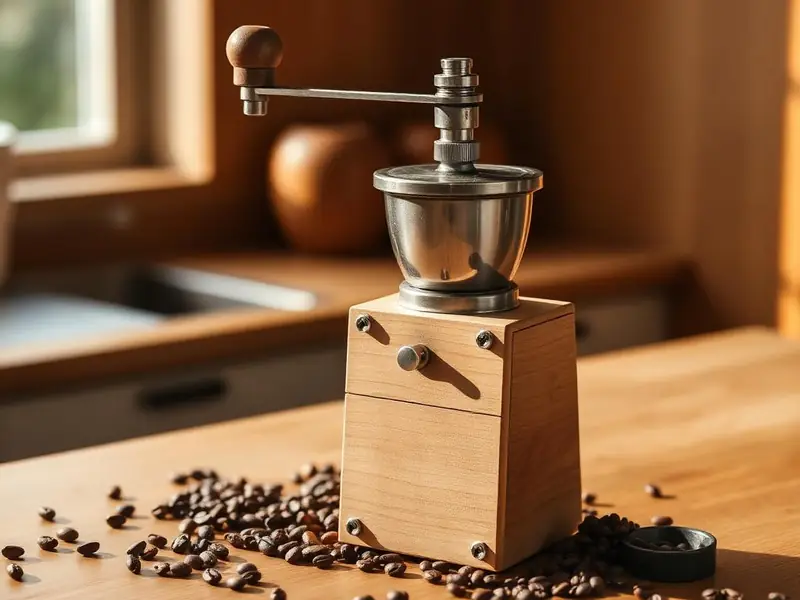
Grind size controls extraction more than any other variable you can change in ten seconds. Too fine and water over-extracts: bitter, drying, ashy. Too coarse and it under-extracts: sour, thin, salty. Get the grind right and a $30 brewer makes excellent coffee; get it wrong and a $3,000 setup can't save you. This chart gives you the starting point for every common method — then the one-line rule to adjust from there.
The grind size chart
| Brew method | Grind size | Looks like | Typical brew time |
|---|---|---|---|
| Espresso | Extra fine | Powdered sugar | 25–30 seconds |
| Moka pot | Fine | Table salt | ~5 minutes on stove |
| AeroPress | Fine–medium | Fine sand | 1–2 minutes |
| Pour over (V60, Kalita) | Medium | Sea sand | 2:30–3:30 |
| Drip machine | Medium | Regular sand | 4–6 minutes |
| Chemex | Medium-coarse | Coarse sand | 3:30–4:30 |
| French press | Coarse | Breadcrumbs | 4 minutes steep |
| Cold brew | Extra coarse | Cracked pepper | 12–18 hours steep |
Start here, then adjust one step at a time based on taste.
The one rule that fixes any cup
Taste first, then adjust: sour, thin or salty means under-extracted — grind finer. Bitter, drying or hollow means over-extracted — grind coarser. Change only the grind, keep everything else the same, and move one step at a time. Two or three adjustments and almost any bean lands in the sweet spot. If the cup is both sour and bitter at once, the problem isn't the setting — it's an uneven grinder producing dust and boulders together, and no setting fixes that.
Why your grinder matters more than the setting
Blade grinders don't grind — they chop, producing boulders and powder in the same batch. The powder over-extracts while the boulders under-extract, and the cup tastes sour and bitter simultaneously. A burr grinder crushes beans between two burrs to a consistent size, which is why it's the single best upgrade in home coffee. Our full grinder roundup compares every price tier.
Baratza Encore
Pros
- 40 consistent settings from espresso-adjacent to cold brew
- The default first burr grinder for a reason
- Every part replaceable — lasts a decade
- Huge support community and guides
Cons
- Not quite fine or consistent enough for serious espresso
- Loud
Baratza Encore ESP
Pros
- Grinds genuinely fine enough for espresso
- Micro-adjustments in the espresso range
- Same bulletproof Encore platform
- One grinder for espresso AND filter
Cons
- $20 more than the base Encore
- Still not a dedicated espresso grinder for light roasts
1Zpresso JX-Pro
Pros
- Hand grinder that rivals $300 electrics
- Fine, numbered adjustments — great for pour over and travel
- Fast: 20 g in about 40 seconds
- Built like a tool, not a toy
Cons
- Manual effort every morning
- Small capacity for big batches
Dialing in by method
Espresso
Espresso is the most grind-sensitive method: a one-step change can swing a shot from 15 seconds to 45. Start at 18 g in, 36 g out in 25–30 seconds. Shot runs fast and tastes sour? Finer. Chokes the machine and drips? Coarser. Our espresso dialing-in guide walks the full process, and the sour/bitter troubleshooting guide covers every off-flavor.
Pour over
For a V60, start medium — like sea sand — and aim for a total brew time of 2:30–3:30 for a 20 g dose. Draining too fast? Finer. Stalling and tasting bitter? Coarser. The flat-bottom Kalita Wave forgives a wider range; the Chemex needs a coarser grind because its thick filters slow everything down. More in our pour over guide and Chemex vs V60 comparison.
French press and cold brew
Both are immersion methods, so they want coarse grinds and patience. French press: breadcrumbs, four minutes. Cold brew: cracked pepper, 12–18 hours. Too fine in a French press means sludge and bitterness; too fine in cold brew means a murky, over-extracted concentrate. Recipes in our French press vs pour over and cold brew guide.
Grind fresh, always
Ground coffee loses most of its aroma within 15 minutes. Whatever method you brew, grinding whole beans immediately before brewing is worth more than any grind chart — the bean storage guide covers keeping them fresh until then.
Compare every grinder we've tested.Shop Ready to upgrade your setup? Check our full reviews.ShopBuy it now
Shop the gear in this guide
Live Amazon listings for the products mentioned above. Prices checked September 2, 2026.


Frequently asked questions
What grind size for pour over coffee?
Medium, like sea sand. For a V60 with a 20 g dose, aim for a total brew time of 2:30–3:30. Draining too fast means grind finer; stalling and bitterness means grind coarser.
What grind size for French press?
Coarse, like breadcrumbs, with a four-minute steep. Too fine a grind produces sludge in the cup and a bitter, over-extracted taste.
Why does my coffee taste sour and bitter at the same time?
Your grinder is producing uneven particles — dust and boulders together. The dust over-extracts (bitter) while the boulders under-extract (sour). No grind setting fixes this; a burr grinder does.
Is a blade grinder good enough for coffee?
No. Blade grinders chop beans unevenly, so every cup is partly over- and under-extracted. An entry-level burr grinder like the Baratza Encore is the single biggest upgrade in home coffee.
Tools & deeper dives
More on espresso, pour over, grinders and cold brew & iced.
Recommended gear
Gear used in this guides guide
Editor-tested picks. Buying through these Amazon links keeps HomeCoffeeBrew free.
Free download
Like this guide? Get one every Sunday.
Plus our free Brew Ratio Cheat Sheet — dial-in ratios for every method, delivered instantly as a PDF.
Keep reading
More gear reviews and city guides
Product reviews
- Baratza Encore ESP · Grinder
- Baratza Encore · Grinder
- Fellow Opus · Grinder
- Eureka Mignon Specialita · Grinder
- 1Zpresso J-Max · Grinder
- 1Zpresso JX-Pro · Grinder
- Breville Bambino Plus · Espresso
- Breville Barista Pro · Espresso
- Gaggia Classic Pro · Espresso
- Rancilio Silvia Pro X · Espresso
- Hario V60 02 Ceramic · Pour-Over
- Chemex 6-Cup Classic · Pour-Over
- Kalita Wave 185 Stainless · Pour-Over
- Fellow Stagg EKG · Kettle
- Fellow Stagg [X] Pour-Over Set · Kettle
- Timemore Black Mirror Basic 2 · Scale
- Timemore Black Mirror Nano · Scale
- Hario V60 Drip Scale · Scale
- Acaia Pearl S · Scale
- AeroPress Original · Immersion
- AeroPress Go · Immersion
- Bodum Chambord 8-Cup French Press · Immersion
- Bialetti Moka Express 6-Cup · Immersion
- Bialetti Venus Stainless · Immersion
- Toddy Cold Brew System · Immersion
- Bonavita BV1900TS 8-Cup · Drip & Pod
- OXO Brew 8-Cup Coffee Maker · Drip & Pod
- OXO Brew Compact Single Serve · Drip & Pod
- Keurig K-Elite · Drip & Pod
- Nespresso Vertuo Next · Drip & Pod
- Third Wave Water Classic Profile · Water & Storage
- BWT Magnesium Filter Pitcher · Water & Storage
- HM Digital TDS-EZ Meter · Water & Storage
- Airscape Coffee Canister · Water & Storage
- Fellow Atmos Vacuum Canister · Water & Storage