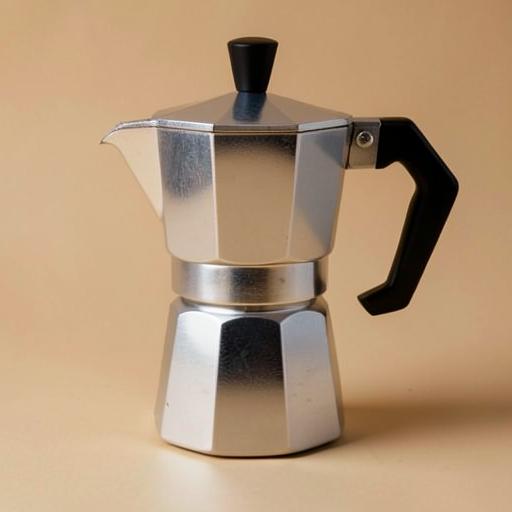
A gentle gurgle near the end of a moka brew is different from violent spitting as soon as coffee appears. The first can be your cue to remove the pot from the heat; the second deserves a check of heat, coffee-bed resistance and assembly. Do not respond to a stalled pot by turning the burner higher. Start with the instructions for your exact model, especially its fill level and stove compatibility. This guide helps you distinguish an ordinary finishing sound from a problem that needs attention.
First: decide whether it is an end-of-brew sound or a fault
Watch the timing as well as the sound. If a steady coffee stream turns pale and begins gurgling near the end, remove the pot from the burner using the handle. Bialetti’s Moka Express guidance describes the gurgle as the point to take the pot off the heat. It does not mean every moka pot should run until it is completely dry. If it spits early, leaks at the joint, or releases steam from the safety valve, stop heating and let the pot cool completely before investigating. Never open a hot, pressurized pot.
| What you observe | First action | Check after cooling |
|---|---|---|
| Gurgling at the end | Remove from the heat | Whether you left it heating too long |
| Spitting from the first coffee | Stop the brew | Heat setting, grind and assembly |
| Steam leaking around the joint | Stop and allow full cooling | Gasket, rim and correct assembly |
| Steam from the safety valve or no flow | Stop; do not increase heat | Manufacturer guidance or customer support |
Use lower heat before changing the coffee
A high burner can drive an uneven, aggressive flow. On a gas stove, choose a flame that stays underneath the base rather than climbing its sides. On electric equipment, begin with a modest setting and remember that a hot plate can keep transferring heat after you switch it off. Move the pot to a safe, heatproof resting place when the brew ends. Never leave it unattended, and keep hands away from the outlet and hot metal.
For a Moka Express, the manufacturer describes starting with room-temperature water, filling to the specified level without exceeding the valve, filling the funnel without pressing the coffee down, and brewing on a low flame. Other techniques use preheated water, but handling a hot base adds burn risk and is not necessary for this diagnostic routine. Follow the manual rather than combining instructions from different pots. Our full moka-pot guide explains the wider brewing routine.
Check the grind and never tamp a moka basket
Choose coffee ground for moka, rather than an espresso-fine powder. Fill the basket evenly without compressing it and brush loose grounds away from the sealing rim. Too-fine grounds or a tightly packed basket can restrict flow. If you use whole beans, move slightly coarser for the next attempt and leave heat and filling unchanged. A grinder number from someone else’s machine is not transferable; use our grind-size chart for the relative range.
Do not underfill a basket to force a smaller drink unless the maker expressly permits it or provides a compatible reducer. The pot’s basket and boiler work together. For a smaller serving, use a smaller pot or share the finished coffee. A six-cup moka pot refers to small espresso-style servings, not six large breakfast mugs. Compare the actual capacity before buying.
Inspect seals and compatibility only when the pot is cold
Look for a damaged or hardened gasket, a distorted funnel, debris on the sealing surfaces, or a filter that needs cleaning. Use replacement parts intended for the exact model and size. Do not modify, block or dismantle the safety valve to make brewing faster. If the pot vents unexpectedly or the source of a leak is uncertain, stop using it and contact the manufacturer. Do not keep retrying a suspicious pot with different grind settings.
Check the stove as well. A traditional aluminum Moka Express is not automatically compatible with an induction hob. A compatible stainless model can be an option, but its base must also meet the hob’s minimum detection size. Confirm the specific model and size before purchase. Changing the stove or adding an adapter is not a remedy for a damaged seal.
Equipment worth considering only after the checks
Bialetti Moka Express 6-Cup
Pros
- Traditional stovetop format for small, concentrated servings
- Useful when replacing a damaged pot of the same style
Cons
- Check hob compatibility before buying
- Six moka cups are not six full mugs
Bialetti Venus Stainless
Pros
- Stainless moka alternative
- A candidate for compatible induction setups
Cons
- Verify the particular size against your hob
- Does not eliminate the need for careful heat control
Baratza Encore
Pros
- Adjustable burr grind for moka and filter experimentation
- Lets you move away from unsuitable pre-ground coffee
Cons
- Not a dedicated espresso dial-in grinder
- Costs more than using correctly ground coffee
Airscape Coffee Canister
Pros
- Opaque reusable bean storage
- Useful if a large bag sits open between brews
Cons
- Cannot repair stale flavor
- Not a fix for mechanical sputtering
Taste the next brew before buying anything else
When the pot is known to be sound, keep a short record: coffee, grind, water-fill level and heat setting. Change one variable per brew. Harshness can come from roast preference or dirty equipment as well as the brewing routine, so sputtering alone cannot diagnose every flavor problem. For milk drinks, see making a latte without a machine. If you prefer a method without stovetop pressure, compare AeroPress and moka pot.
Source for model-specific handling: Bialetti, Moka Express instructions and product guidance, https://www.bialetti.com/it_en/moka-express-experience. Read the manual supplied with your pot before using it.
Compare gear for your brewing methodShopBuy it now
Shop the gear in this guide
Live Amazon listings for the products mentioned above. Prices checked September 2, 2026.


Frequently asked questions
Is moka-pot gurgling normal?
A finishing gurgle can be normal and is a cue to remove the pot from heat. Early violent spitting or leaks require investigation.
Should I tamp moka-pot coffee?
No. Fill the basket evenly without pressing the coffee down, following the manufacturer’s instructions.
Can I open a sputtering moka pot?
Never open it while hot or pressurized. Stop heating and allow complete cooling first.
Tools & deeper dives
Recommended gear
Gear used in this techniques guide
Editor-tested picks. Buying through these Amazon links keeps HomeCoffeeBrew free.
Free download
Like this guide? Get one every Sunday.
Plus our free Brew Ratio Cheat Sheet — dial-in ratios for every method, delivered instantly as a PDF.
Keep reading

More gear reviews and city guides
Product reviews
- Baratza Encore ESP · Grinder
- Baratza Encore · Grinder
- Fellow Opus · Grinder
- Eureka Mignon Specialita · Grinder
- 1Zpresso J-Max · Grinder
- 1Zpresso JX-Pro · Grinder
- Breville Bambino Plus · Espresso
- Breville Barista Pro · Espresso
- Gaggia Classic Pro · Espresso
- Rancilio Silvia Pro X · Espresso
- Hario V60 02 Ceramic · Pour-Over
- Chemex 6-Cup Classic · Pour-Over
- Kalita Wave 185 Stainless · Pour-Over
- Fellow Stagg EKG · Kettle
- Fellow Stagg [X] Pour-Over Set · Kettle
- Timemore Black Mirror Basic 2 · Scale
- Timemore Black Mirror Nano · Scale
- Hario V60 Drip Scale · Scale
- Acaia Pearl S · Scale
- AeroPress Original · Immersion
- AeroPress Go · Immersion
- Bodum Chambord 8-Cup French Press · Immersion
- Bialetti Moka Express 6-Cup · Immersion
- Bialetti Venus Stainless · Immersion
- Toddy Cold Brew System · Immersion
- Bonavita BV1900TS 8-Cup · Drip & Pod
- OXO Brew 8-Cup Coffee Maker · Drip & Pod
- OXO Brew Compact Single Serve · Drip & Pod
- Keurig K-Elite · Drip & Pod
- Nespresso Vertuo Next · Drip & Pod
- Third Wave Water Classic Profile · Water & Storage
- BWT Magnesium Filter Pitcher · Water & Storage
- HM Digital TDS-EZ Meter · Water & Storage
- Airscape Coffee Canister · Water & Storage
- Fellow Atmos Vacuum Canister · Water & Storage