Whole Bean vs Pre-Ground Coffee: When Is a Grinder Worth It?
November 22, 2026 · 5 min read
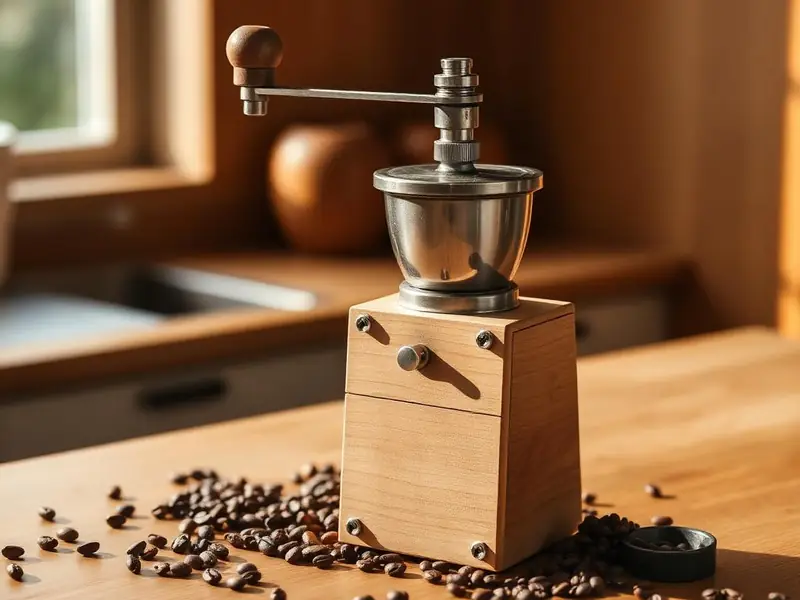
Whole beans offer grind control and let you grind only the dose you need. Pre-ground coffee offers convenience and a lower starting equipment cost. Neither label guarantees good flavor: a fresh, suitable ground coffee can be a better choice for you than old whole beans or an awkward grinder you never use. The useful question is whether controlling the grind fixes a problem in your current brewing routine.
The short comparison
| Factor | Whole bean | Pre-ground |
|---|---|---|
| Equipment | Requires a grinder | No grinder required |
| Grind adjustment | You can change it for each brew | Fixed by the supplier |
| Daily routine | Weigh, grind and brew | Weigh and brew |
| After opening | Grind only what you need | All the coffee is already ground |
| Best starting use | Several methods or recipe experimentation | One method with a suitable supplied grind |
Grinding exposes more surface area, so ground coffee is more vulnerable to losing aroma during storage. That does not create a universal deadline in minutes or days. Packaging, roast, storage and personal taste all influence how long coffee remains enjoyable. Start with smaller quantities and compare cups rather than treating a date on a chart as a guarantee. Our bean-storage guide covers sealing, portioning and freezing options.
Buy pre-ground when convenience is the real priority
If you brew one daily pot of drip coffee and have a reliable bag ground for that machine, you may not need another appliance. Ask a local roaster to grind a small bag for your specific method; that often gives you a better starting point than a generic grind label. Keep the pack sealed, away from heat and light. Do not leave the whole supply exposed in a large decorative container just because it looks good beside the machine.
Pre-ground can also suit an occasional decaf drinker, an office routine where grinding noise is unwelcome, or a traveler trying to pack lightly. The main limit is fixed particle size. If you switch from drip to moka or espresso, the same bag may not be appropriate. For a flexible manual option, see our AeroPress pre-ground recipe.
Buy a grinder when you need control, not a promise
A burr grinder gives you a repeatable adjustment range. That is useful when a pour-over drains too fast or too slowly, when you try different roast styles, or when you move between methods. A blade grinder chops coffee unevenly and is less predictable for repeatable adjustments. Still, no grinder can guarantee sweetness from beans you dislike, unsuitable water or a dirty brewer. Fix those obvious issues before expecting an appliance to rescue every cup.
Espresso has an additional requirement: sufficiently fine adjustment to dial in the shot. A conventional filter-oriented grinder is not interchangeable with a dedicated espresso model. Check the intended adjustment range rather than assuming that an expensive brand name or the word burr is enough. Our espresso-grinder guide and filter-grinder guide separate those uses.
Compare total cost without inventing savings
A grinder adds a purchase cost, electricity or hand-grinding effort, and a cleaning routine. Whole beans are not automatically cheaper than ground coffee. Compare the same bag weight and quality level, then include the grinder cost over the period you expect to use it. A flavor improvement can justify that spending, but it should not be sold as a financial saving when the bag price is unchanged.
| Example input | Illustrative value |
|---|---|
| Grinder purchase | Assume $180; not a current product quote |
| Use period | 3 years |
| Annualized equipment cost | About $60 per year |
| Brewing days | 300 per year |
| Equipment cost per brewing day | About $0.20, before other costs |
A simple ownership illustration: $180 ÷ 3 ÷ 300. Actual cost depends on purchase price, lifespan and use.
Measure dose to understand bean use. A 250 g bag gives about sixteen 15 g doses with a little remaining, or about twelve 20 g doses. That arithmetic applies to whole and ground coffee alike. If your new routine uses more coffee per cup, spending on beans can rise even when the cup tastes better. Use the ratio calculator to make intentional changes rather than adding another scoop by habit.
Match equipment to the limitation
Baratza Encore
Pros
- Filter-focused burr adjustment
- A candidate for drip, pour-over and French press
Cons
- Not the natural choice for fine espresso dial-in
- An extra counter appliance
Baratza Encore ESP
Pros
- Adjustment ranges for espresso and filter
- Useful if you plan to add espresso later
Cons
- Switching methods takes resetting and recipe notes
- More equipment than a single pre-ground routine needs
Fellow Opus
Pros
- Single-dose workflow
- An alternative for users comparing several brewing methods
Cons
- Confirm the adjustment workflow before purchase
- Retained grounds and cleaning still matter
Airscape Coffee Canister
Pros
- Opaque sealed storage
- Useful for a daily portion of beans or grounds
Cons
- Storage does not make old coffee fresh
- The original resealable bag may already be sufficient
A low-risk comparison before upgrading
Buy a small bag from a roaster and ask for half whole and half ground for your method if that service is available. Borrow a suitable grinder, then brew both portions with the same dose, water and brewer. Compare after cooling and repeat on another day. You are looking for a difference you value, not proving that one preparation must win every time. If the difference is small and convenience matters more, staying with pre-ground is a reasonable decision.
Check what interrupts your routine as well: grinding noise early in the morning, hand-grinding effort, counter space and cleanup. An upgrade that makes coffee too inconvenient can become unused gear. For a complete equipment order, use the home setup guide or the setup quiz. Buy only the piece that addresses your next limitation.
Compare grinders by intended brewing useShopBuy it now
Shop the gear in this guide
Live Amazon listings for the products mentioned above. Prices checked September 2, 2026.


Frequently asked questions
Is whole-bean coffee always better?
No. Whole beans offer grind control, but bean quality, freshness, storage and brewing still determine the result.
Does a grinder save money?
Not automatically. It adds equipment cost, while whole and ground bean prices vary. Compare total cost rather than assuming savings.
Can one grind work for every brewer?
Usually not well. Espresso, moka, filter and French press need different starting ranges; adjust for the specific equipment.
Tools & deeper dives
More on grinders and brewing basics.
Recommended gear
Gear used in this beans guide
Editor-tested picks. Buying through these Amazon links keeps HomeCoffeeBrew free.
Free download
Like this guide? Get one every Sunday.
Plus our free Brew Ratio Cheat Sheet — dial-in ratios for every method, delivered instantly as a PDF.
Keep reading
More gear reviews and city guides
Product reviews
- Baratza Encore ESP · Grinder
- Baratza Encore · Grinder
- Fellow Opus · Grinder
- Eureka Mignon Specialita · Grinder
- 1Zpresso J-Max · Grinder
- 1Zpresso JX-Pro · Grinder
- Breville Bambino Plus · Espresso
- Breville Barista Pro · Espresso
- Gaggia Classic Pro · Espresso
- Rancilio Silvia Pro X · Espresso
- Hario V60 02 Ceramic · Pour-Over
- Chemex 6-Cup Classic · Pour-Over
- Kalita Wave 185 Stainless · Pour-Over
- Fellow Stagg EKG · Kettle
- Fellow Stagg [X] Pour-Over Set · Kettle
- Timemore Black Mirror Basic 2 · Scale
- Timemore Black Mirror Nano · Scale
- Hario V60 Drip Scale · Scale
- Acaia Pearl S · Scale
- AeroPress Original · Immersion
- AeroPress Go · Immersion
- Bodum Chambord 8-Cup French Press · Immersion
- Bialetti Moka Express 6-Cup · Immersion
- Bialetti Venus Stainless · Immersion
- Toddy Cold Brew System · Immersion
- Bonavita BV1900TS 8-Cup · Drip & Pod
- OXO Brew 8-Cup Coffee Maker · Drip & Pod
- OXO Brew Compact Single Serve · Drip & Pod
- Keurig K-Elite · Drip & Pod
- Nespresso Vertuo Next · Drip & Pod
- Third Wave Water Classic Profile · Water & Storage
- BWT Magnesium Filter Pitcher · Water & Storage
- HM Digital TDS-EZ Meter · Water & Storage
- Airscape Coffee Canister · Water & Storage
- Fellow Atmos Vacuum Canister · Water & Storage